By David J. Newman, DPhil, and Sheo Singh, PhD
December 19, 2025 | This article appears in Volume 61, Issue 3
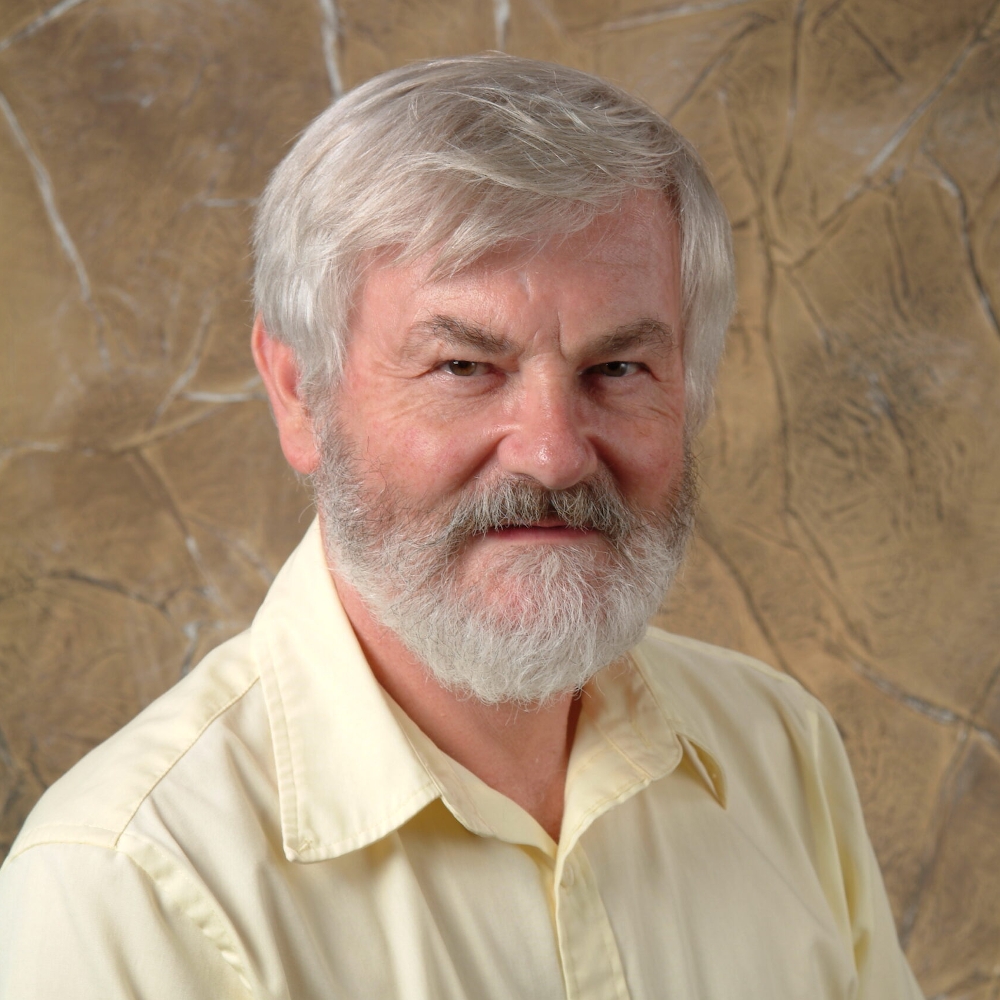
[ASP Fellow, Dr. Gordon Mitchell Cragg, died on August 25, 2025, at the age of 89. He was a devoted member of ASP throughout his long and illustrious career in natural products research. The following tribute has been written by his two longtime friends, colleagues, and ASP Fellows, Drs. Dave Newman and Sheo Singh.]
It is with great sorrow that both of us have put this tribute together as we had known or known of Gordon for many years covering different stages of his multifactorial career and “nominal retirements” at different stages.
My (DJN) first “introduction” to Gordon and other Rhodes University graduate students occurred in the middle of 1961 when one of his colleagues (George MacGillivray) joined the Kenner laboratory at the University of Liverpool where I had just started as a graduate student in the same group. Though at that time I only knew of Gordon as a graduate student at Oxford and did not meet him in person for a significant number of years.
Gordon’s academic journeys, once he received his DPhil in 1964, included a postdoctoral sojourn in California where he met Jacqui, his future wife. This was followed in 1965 by a return to South Africa lecturing at the University of South Africa in Pretoria through 1971, interspersed by a return to the US to marry Jacqui in December of 1966. They returned to South Africa and, from memory (DJN), Gordon said that they took the “long way back by ship.”
In 1972 Gordon took a sabbatical year at Arizona State with Dr. George Pettit, and then the Craggs returned to South Africa where Gordon joined the faculty at the University of Cape Town as an associate professor. In 1979 the Craggs then migrated to the Pettit group at the Cancer Research Institute at Arizona State University in Tempe again, working with Pettit on plant-derived (potential) antitumor agents. During his time at Arizona, he worked on many plant-derived natural products, most notably on combretastatin, pancratistatin, phyllanthostatins, rolliniastatins, melastatin and lynchostatins. He then met Sheo Singh when Sheo joined the Pettit group. Gordon was one of two informal assistant directors at CRI and led the plant projects.
There were two major “efforts” led by Gordon in his “early times” at NCI. Perhaps the best known was the work involved in obtaining sufficient “tree bark” from the Pacific yew...
On Monday, November 28, 1983, following the Thanksgiving holiday, Gordon was the first person I (Sheo) met upon my arrival at ASU, my first day in a new place. We engaged in an extensive discussion regarding the operations of the group and the Institute. That initial conversation proved to be pivotal, laying the foundation for my successful career at ASU and beyond. When I was assigned the rework of combretastatin as my first project, Gordon served as both a valuable resource and mentor. He left ASU in late 1984 to join the NCI but continued to act as my advisor and close confidant throughout the years. In mid-1989, Gordon assisted with my recruitment at NCI, but he strongly encouraged me to pursue an opportunity at Merck. Our collaboration continued on various projects related to Pettit, ASP and natural products.
As Sheo mentioned above, in 1984 (at the urging of Dr. Matt Suffness) Gordon moved from Arizona to the Natural Products Branch (NPB) of the National Cancer Institute (NCI), and in 1989 he became its chief, initially in the Bethesda area and then at Fort Detrick in Frederick, MD where he led the NPB until his “formal retirement” at the very end of 2004. Gordon offered me (DJN) a position dealing with the microbial and marine collections in 1989, but I did not formally accept until early 1991.
There were two major “efforts” led by Gordon in his “early times” at NCI. Perhaps the best known was the work involved in obtaining sufficient “tree bark” from the Pacific yew, which was considered by the US Forest Service to be a “trash tree,” so very few records existed as to where “large numbers” could be found. At the time (late 1980s) it was reckoned (back of envelope calculations) that three six-inch diameter trees were required to provide enough raw material from which to extract sufficient “raw taxol” to treat a patient. Gordon was also instrumental “behind the scenes” in helping the then BristolMyersSquibb to investigate potential sources of an important precursor that could then be a source of semisynthetic taxol. Gordon received his first NIH Award of Merit for the taxol work.
However, there was also another side to Gordon that was very important for the NCI program designed to obtain plant raw materials from a variety of countries in Central and South America and Africa (particularly Madagascar and countries abutting South Africa). In order to materially aid in the legalities of such collections, Gordon collaborated with a very talented NIH microbiologist (Dr. Tom Mays) who also had a JD and who worked with the groups at NIH that predominately worked with overseas organizations. Together they were responsible for the production of the NIH Letter of Collection (NIH LoC) which predated the UN’s Convention of Biodiversity (CBD) by close to three years. It should be noted that the USA has never ratified the CBD nor the earlier (1982) United Nations Convention on the Law of the Sea (UNCLOS).
With one exception, the NIH document effectively covered all of the future points in the CBD. The exception from the CBD was due to the US Government law that any discovery made by NIH scientists must be patented in the US. This was simply overcome by adding a statement that any organization using NCI-collected materials or wishing to utilize any NCI patent must involve the “source country” in any future (clinical) development. Though originally designed for plant sources, it also was later applied to marine and microbial sources as well.
We believe that humanity has lost not only an exemplary scientist but also an exceptional individual.
Not only was the NIH LoC used for NCI-funded collections, it was also used as an underpinning of the multi-country/multi-USG organizations that led to the program that funded collections and scientific work-up by scientists from many countries, where the “source-country” must have a co-principal investigator together with a comparable US scientist, a number of whom were from NIH, NSF or research universities. NPB used this mechanism to be able to bring in young investigators from such overseas groups to work with their countries’ raw materials for periods up to one year but using methods not available in their home countries. This work effectively led to Gordon’s second NIH Award of Merit, with a third being awarded for technology transfer efforts across countries.
To give an idea of the scale of NCI collections, these amounted to over 250,000 plant specimens and over 35,000 marine specimens. These materials can be provided under the NIH LoC to any organization worldwide willing to sign that document, and even today, these materials are now being further fractionated/developed by the current NPB and their associates to provide materials worldwide, again if the NIH LoC is signed in advance of any receipt of material.
Gordon also worked extensively with Brazil well before his retirement, setting up agreements with the relevant Brazilian organizations. This made my (DJN) work in Brazil much easier whilst being the NPB branch chief and after formal retirement, so I was “treading in the footsteps of a giant!”
In 1991, DJN joined the NPB working on microbial and marine sources, and when Gordon “retired” as of December 31, 2004, DJN was acting chief until appointed chief in 2006. Gordon became an NIH Special Volunteer (an honorary yearly appointment) and continued in that role for a significant period of time, and Sheo Singh, after retirement from Merck, also had a similar role, as did DJN after retiring in January 2015, when Barry O’Keefe became NPB Branch Chief.
However, Gordon could not “stay still.” He was extremely active in helping what was then the youngest NIH Center which is currently known by the acronym NCCIH. Gordon spent a lot of time after “formal retirement” working with that center. In addition to all of the awards from NIH, Gordon received a DSc (honoris causa) from his alma mater, Rhodes University, in 2011, which may well have been his most cherished award.
Moving to non-NIH scientific areas, Gordon was very active in the American Society of Pharmacognosy (ASP) where he served as president from 1998-1999. He was appointed as an Honorary Member of the ASP in 2002 and named a Fellow of the society in 2008. He also was the “Leader” of the ASP Fellows group for five years, and up to his demise he was still active on the ASP Newsletter Committee, or as he put it, making certain that DJN did not go too far in any of his ASP-linked articles.
Quite recently, Gordon served as the principal nominator for my (Sheo) ASP Farnsworth Award and co-authored the editorial for the March 2025 JNP issue dedicated to me, published only a few months before his passing. We corresponded during the first week of August (2025) just prior to the ASP meeting while he was hospitalized. This ultimately became our last and most cherished communication.
Based on conversations with multiple natural product practitioners, our notes and comments about Gordon reflect views commonly shared throughout the community, as he has had a highly positive impact on many individuals worldwide.
Both of us have lost an outstanding friend and colleague; however, Gordon’s influence will endure through the many scientists who engaged with him over the years, in the United States, his native South Africa and many other “waypoints around the globe.”
We believe that humanity has lost not only an exemplary scientist but also an exceptional individual. 